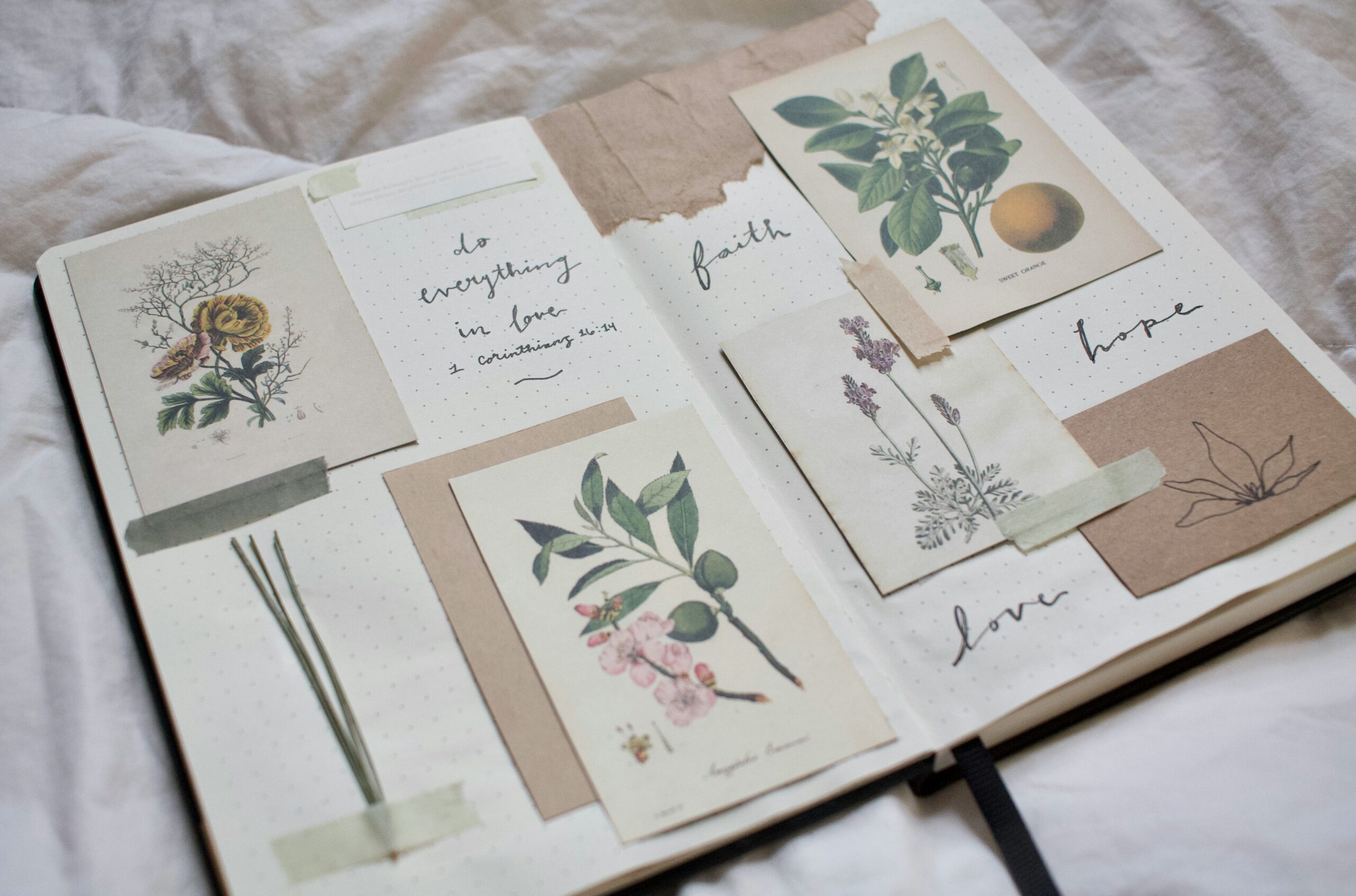
Nature journalling is a simple practice with a surprisingly deep impact. At its heart, it is just the act of noticing the natural world and recording what you see, hear, feel, and wonder about. But in practice, it becomes something much more powerful: a way of slowing down, building attention, and forming a quiet relationship with the outdoors.
It doesn’t require artistic skill or scientific knowledge. A nature journal can be filled with drawings, scribbled observations, pressed leaves, questions, maps, poems, or even just lists of what you noticed on a walk. The value is not in how it looks, but in the act of paying attention.
Why Nature Journalling Matters
In a busy, overstimulated world, children (and adults) are rarely given space to observe slowly. Nature journalling gently shifts that pace. Instead of rushing through a walk or outdoor visit, it invites us to pause:
- What shapes do you notice in the leaves?
- How many shades of green can you see in one patch of grass?
- What sounds are happening if you sit still for one minute?
This kind of attention builds what educators often call “noticing skills” — the foundation of curiosity, scientific thinking, and creative expression.
For children who learn outside of traditional school settings, it can also become a grounding practice. There is no pressure to get it right, no fixed outcome, and no comparison. Just observation.
What You Need to Start
One of the strengths of nature journalling is how accessible it is. You don’t need special materials:
- A notebook (any kind will do)
- A pencil or pen
- Optional: coloured pencils, watercolours, or a clipboard for outdoor use
That’s it. Some families like to dedicate one sketchbook per season or per year, while others simply add pages as they go.
Simple Ways to Begin
If you’re new to it, starting small helps. A full page can feel overwhelming, so try one of these approaches:
- Draw one thing you can see right now (a leaf, stone, tree bark)
- Write five things you notice in under two minutes
- Pick one sound and describe it in detail
- Ask a question instead of answering one (“Why do these leaves curl at the edges?”)
Over time, these small entries build into a rich record of seasons, places, and experiences.
Learning Without Pressure
One of the quiet strengths of nature journalling is that it supports learning without formal structure. Children naturally begin to notice patterns, ask questions, and make connections. A child might start by drawing a feather and end up exploring birds, flight, habitats, or weather patterns — all sparked by a single moment of attention.
It also allows for emotional expression. Some pages might be detailed and careful, others messy or full of words. All of it is valid.
A Practice, Not a Product
Perhaps the most important part of nature journalling is letting go of the idea that it needs to “look good.” It is not a scrapbook for display or a project to be completed. It is a living record of attention.
Some days it will feel easy. Other days it might not happen at all. That’s fine. Like nature itself, it moves in cycles.
An Invitation
You don’t need to go far to begin. A garden, a pavement crack with weeds, a window view, or a short walk can be enough. The practice begins wherever you are, with whatever you can notice right now.
Over time, nature journalling becomes less about the page and more about how you see the world when the notebook is closed.

Leave a Reply